
Every year, lakhs of graduates in India look for a management program that will take them from the classroom to the corner office. One of the most sought-after courses is the Post Graduate Diploma in Management (PGDM), which offers flexible course structures, a strong placement record and industry-relevant courses. If you are looking for the Top PGDM institutes in India, this will tell you what exactly is PGDM, how you can get admission to the PGDM program, which programs are in demand, the fees involved, and where it can take your career.
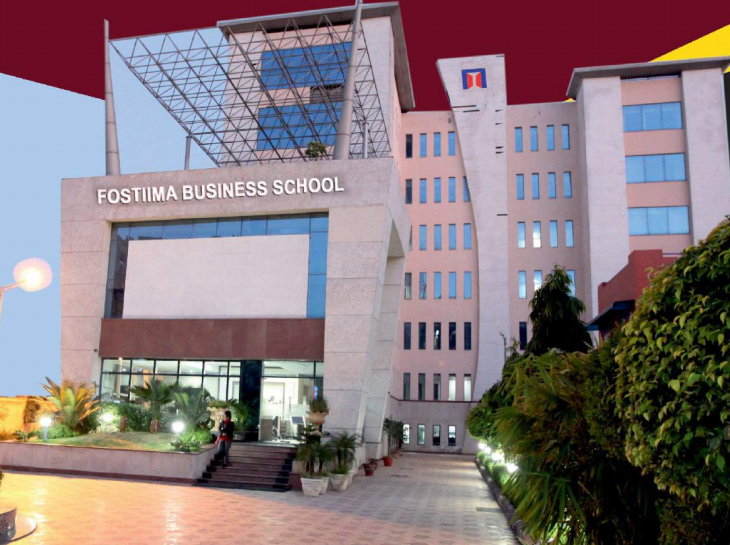
Organisations such as FOSTIIMA Business School in New Delhi have established a name for themselves in the field of industry-focused management education. They're a representative example of the types of schools that aspirants ought to consider, as well as the national brands.
1. What Is a PGDM and Why Does It Matter?
PGDM is a two year full-time postgraduate management course offered by autonomous institutes approved by All India Council for Technical Education (AICTE). These institutes do not have to follow a university's syllabus cycle so they can offer updates to match employers' requirements.
The most significant distinction between a PGDM and MBA is that of autonomy:
• Curriculum flexibility: PGDM institutes keep changing the courses frequently and add analytics, digital marketing, fintech, sustainability, and other such courses as soon as they come up in the industry. Typically, the revision cycle for MBA programs affiliated with universities is slower.
• Industry orientation: Case studies, live projects, simulations, and corporate mentoring are central to most PGDM programs.
• Degree vs. diploma: Technically a PGDM is a diploma, while an MBA is a degree. The AICTE has accepted the PGDM as a degree equivalent to MBA for employment and the top recruiters don't differentiate between the two.
The PGDM is suitable for students who wish for a course that is nearer to the market and faster in its adaptability. Hence, there is a lot of competition for admission in the Top PGDM Institutes in India each year.
2. Top PGDM Institutes in India: What to Look For
Ranking is a great place to start but must not be the end all be all. Some of the institutes that have got a regular appearance in the list of the top PGDM and business schools include XLRI Jamshedpur, SPJIMR Mumbai, MDI Gurgaon, IMT Ghaziabad, TAPMI Manipal, Great Lakes Chennai, FORE School of Management Delhi, IMI Delhi, BIMTECH Greater Noida, and XIMB Bhubaneswar. There are a few institutes of management who offer PGDM programmes of their own. In addition to these are newer institutions like the FOSTIIMA Business School, which provide a more focused and student-centric approach particularly for those who wish to have personal mentorship and industry interaction.
When considering alternatives, consider these factors:
1. Accreditation and approvals: Confirm the approval from AICTE and the approval from NBA, AACSB, or AMBA as applicable.
2. Faculty quality: Both academic scholars and industry practitioners are good.
3. Placement history: Check for average salary, number of recruiters and roles provided rather than the top number.
4. Industry exposure: Internships, live projects, guest lectures and corporate exposures are key.
6. Alumni network: A powerful and active network of alumni provides opportunities long after graduation.
6. Infrastructure and location: Metro cities like Delhi NCR, Mumbai and Bengaluru provide greater internship and networking opportunities.
7. Return on investment: Compare total fees against realistic salary outcomes.
3. Admission Process for PGDM Programs
The admission process of the top PGDM institutes is a competitive one and normally comprises of several stages.
Eligibility
• Bachelor's Degree in any subject from a recognized university with at least 50% marks (45% marks for reserved categories at most institutes).
• For final semester students who are awaiting results, the application is usually made provisionally.
• Most institutes will have a preference for work experience on certain courses, while freshers are welcome at most.
Entrance Exams Accepted
• CAT: Accepted by the IIMs and many top PGDM institutes.
• XLRI: requires XAT and it is accepted by a lot of private institutes.
• CMAT: A national level exam for AICTE approved institutes.
• GMAT / GMAT Focus: Admitted by some institutes, particularly those with an international perspective.
Some schools also accept MAT, ATMA and institute level tests or hold their own tests.
Selection Stages
1. Entrance exam score: This clears the first cutoff.
2. Written Ability Test (WAT): Tests Structured Thinking and Communication.
3. Group Discussion (GD): Assesses teamwork, clarity and leadership.
4. Personal Interview (PI): The most critical round that includes academic, career and awareness.
5. Final merit list: Weightage is based on Exam Score, Academic Performance and Work Experience and Interview Performance.
Preparation tip: Start six to eight months before the exam. Develop a solid foundation in Quantitative aptitude, Verbal ability and Logical reasoning and read business related news everyday to prepare for GD and PI rounds.
4. Popular PGDM Specializations
The best thing about a PGDM is that there are various specializations to choose from. Most programs have a core of first-year courses that focus on management concepts, followed by a second year of specialization. The most popular choices are given here.
Marketing
Includes topics such as brand management, consumer behavior, digital marketing, sales strategy, and market research. Perfect for those with a creative and analytical nature, interested in understanding what customers want.
Finance
Specialties include corporate finance, investment banking, equity research, risk management and financial markets. Helpful quantitative skills and the jobs are better paid in management.
Human Resource Management
Instructor of Talent Acquisition, Organizational Behaviour, Compensation Design and Employee Engagement. It is suitable for managers with a people focus.
Business Analytics and Data Science
It is one of the fastest growing options that integrates statistics, machine learning and business strategies to help make decisions based on data in various industries.
Operations and Supply Chain Management
Covers Logistics, Purchase, Process Improvement & Quality Management – all of which are critical and growing areas of concern in ecommerce & manufacturing.
International Business
Equips students with the knowledge and skills to prepare for international trade, international strategy and international market entry.
Information Technology and Digital Business
Combines technology and management solutions, including digital transformation, ERP and IT consulting.
Various institutes, such as FOSTIIMA Business School, allow students to pursue diverse specializations and interweave electives, enabling them to develop a profile adaptable to evolving industry needs.
5. Career Scope and Placements After PGDM
Pursuing a PGDM opens opportunities in nearly all areas. Recruiters are usually from consulting, banking and financial services, FMCG, e-commerce, IT and analytics, manufacturing, healthcare and media.
Common Job Roles
• Management Trainee / Associate
• Marketing Manager / Brand Manager
• Financial Analyst / Investment Banker
• HR Business Partner / Talent Acquisition Manager
• Business Analyst / Data Analyst
• Construction Management Specialist
• Product Manager
• Management Consultant
Salary Expectations
The salaries vary significantly in the institute and specialization and also depend on previous work experience. The best schools are offering average packages of over ₹20 lakh per annum, and many mid-to-upper tier schools are offering packages in the range of ₹6–12 lakh per annum for freshers. Every position, in finance, consulting and analytics generally starts at a higher salary, and increases significantly as experience is added.
Beyond Placements
There are other career options for PGDM as well:
• Entrepreneurship: The learning of finance, marketing and operations will also lay a good foundation for starting a business.
• Family business: Management training to professionalize and scale up existing family businesses.
• Advanced education programs: A few graduates go on to complete doctoral studies or advanced certifications.
• International career opportunities: Exposure and certification may open the door to international career opportunities.
What makes a PGDM truly valuable is the skills it fosters – leadership, problem-solving, communication, and strategic thinking. No matter what industry you choose, they remain relevant.
6. How to Choose the Right PGDM Institute for You
There are lots of choices, and it is important to have a plan in place to help you choose.
1. Define your career goal. Decide whether you are interested in consulting, finance, marketing or analysis or entrepreneurship and narrow the choices to institutes that excel in one of these areas.
2. Research placement data. Request the placement report and check out median packages, roles, and recruiter diversity.
3. Check faculty and curriculum. Look for up-to-date electives and industry-linked projects.
4. Travel or participate in a virtual visit. Speak to the students and alumni to receive a real picture of campus life.
5. Compare total cost and ROI. Consider costs of fees and potential career outcomes.
6. Consider culture and mentoring. It can be as important as the brand name, as smaller institutes will give their faculty more attention.
For those seeking a programme that blends practical learning with personal guidance, FOSTIIMA Business School is a worthwhile candidate to consider. Its focus on industry-ready skills, specialization choices, and a student-centric approach makes it a strong contender among emerging management institutes.
Final Thoughts
Making a choice of the Top PGDM Institutes in India is a crucial decision and requires thorough research on admission procedures, course specializations, tuition fees, and career prospects. Don't just consider the rankings; consider faculty quality, industry exposure and actual placement statistics. So if you're looking for the top national brand or an emerging school like FOSTIIMA Business School, the right institute is the one that aligns with your aspirations, approach to learning and budget.
Frequently Asked Questions (FAQs)
1. What is the difference between PGDM and MBA?
A PGDM is provided by autonomous institutes approved by AICTE which have the liberty of changing the curriculum as per their wish, whereas a degree in MBA is offered by the universities or affiliated college based on the university syllabus which is to be changed as per the University's directives. In the area of employment, both are considered equal.
2. Which entrance exams are accepted for PGDM admission?
CAT, XAT, CMAT and GMAT are the most popular exams, whereas some institutes also accept MAT, ATMA or their own exams. Please refer to the admission notification of each institute for details.
3. What is the average fee for PGDM programs in India?
Payments for the complete two-year course vary with the institute, from about ₹5 lakh at emerging institutes to ₹35 lakh at the very best. Please refer to the most up to date statistics available from the institute's website.
4. Is work experience mandatory for PGDM admission?
Not at most institutes. Freshers are accepted, but work experience might boost your profile and be appreciated for selection and executive programs.
5. Which PGDM specialization has the best career scope?
There are excellent opportunities in finance, business analytics, marketing and operations. This will depend on your interests, aptitude and long-term goals, and the demand for roles involving analytics is increasing rapidly across all sectors.